These classical sculptors are among the highest regarded, most influential antecedents of my work. They inform my style, and I try to advance the conversation they started. janese even studied under Pitynski and Lucchesi in the early 2000s.

François Auguste René Rodin (November 1840 – November 1917) was a French sculptor, generally considered the founder of modern sculpture. He was schooled traditionally and took a craftsman-like approach to his work. Rodin possessed a unique ability to model a complex, turbulent, and deeply pocketed surface in clay. He is known for such sculptures as The Thinker, Monument to Balzac, The Kiss, The Burghers of Calais, and The Gates of Hell.
Many of Rodin’s most notable sculptures were criticized, as they clashed with predominant figurative sculpture traditions in which works were decorative, formulaic, or highly thematic. Rodin’s most original work departed from traditional themes of mythology and allegory. He modeled the human body with naturalism, and his sculptures celebrate individual character and physicality. Although Rodin was sensitive to the controversy surrounding his work, he refused to change his style, and his continued output brought increasing favor from the government and the artistic community.
From the unexpected naturalism of Rodin’s first major figure to the unconventional memorials whose commissions he later sought, his reputation grew, and Rodin became the preeminent French sculptor of his time. His sculptures declined in popularity after his death in 1917, but within a few decades his legacy solidified. Rodin remains one of the few sculptors widely known outside the visual arts community.
See Also
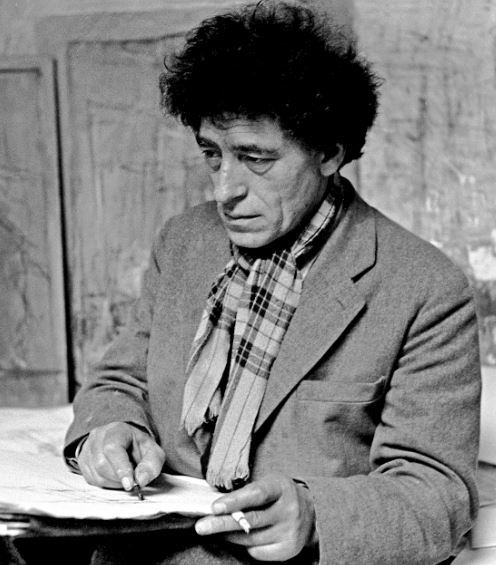
Alberto Giacometti (October 1901 – January 1966), a Swiss sculptor, painter, and printmaker, was one of the most important sculptors of the 20th century. His work was particularly influenced by artistic styles such as Cubism and Surrealism. Philosophical questions about the human condition, as well as existential and phenomenological debates played a significant role in his work. Around 1935 he gave up on his Surrealist influences to pursue a more deepened analysis of figurative compositions. His critical nature led to self-doubt about his own work and his self-perceived inability to do justice to his own artistic vision. His insecurities nevertheless remained a powerful motivating artistic force throughout his entire life.
Between 1938 and 1944 Giacometti’s sculptures had a maximum height of 2.75 inches (7 centimeters). Their small size reflected the actual distance between the artist’s position and his model. In this context he self-critically stated: “But wanting to create from memory what I had seen, to my terror the sculptures became smaller and smaller”. After World War II, Giacometti created his most famous sculptures: his extremely tall and slender figurines. These sculptures were subject to his individual viewing experience—between an imaginary yet real, a tangible yet inaccessible space.
See Also
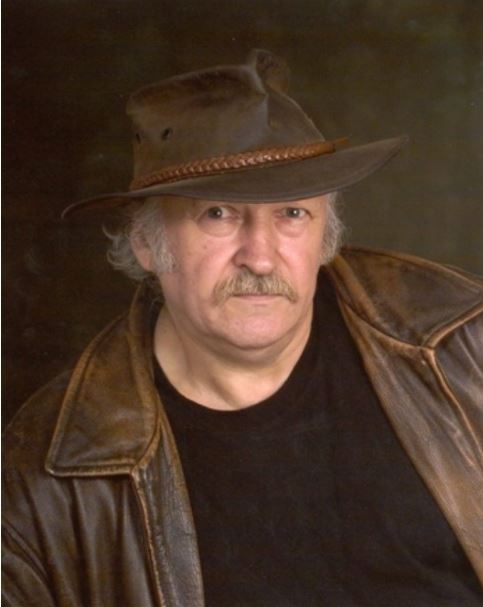
Andrzej Pitynski (March 1947 – September 2020), artist and sculptor was born in 1947 in Ulanow [Poland]. In 1974, he finished the Fine Arts Academy in Krakow in the studio of Professor Bandura and a six-month internship at the monument and statuary foundry for non-ferrous metals in the Gliwice Enterprise for Technical Apparatus. In October of the same year, he came to New York. Already in Poland, he had some important accomplishments to his credit.
At the beginning of his stay in America he took up odd jobs and used the money to study at the New York Arts Students League. He was fortunate because soon he received work at the Sculpture House in Manhattan where he learned in depth and developed the technique of building monumental sculptures and the ancient technique, 4,500 years old, of casting bronze. Soon he became the assistant to Alexander Ettel, the senior master of American sculpture.
During an interview, he replied to a question on the role of monuments in life. “A monument is an expressive symbol. A good one, looked at for even a few minutes, will remain in memory for years or even for one’s entire lifetime. Monuments are the milestones in a nation’s history — they will not allow other systems and governments to destroy the core values of a national culture.”
See Also
Poles in America Foundation: Pitynski
Ambassador of Poland’s History

Bruno Lucchesi (born 1926) is an Italian-American sculptor known for his figurative work.
Lucchesi was born in Fibbiano Montanino in Lucca, Italy. He studied at the Art Institute of Lucca, then moved to Florence, Italy, where he became Assistant Professor at Florence University in 1953. In 1958 he moved to New York City, and has since taught there at the National Academy of Design and the New School of Social Research. He continues to teach workshops in the United States and Europe.
Beginning in 1961, Lucchesi has had numerous exhibits at Forum Gallery in New York City. His works are in the permanent collections of the Metropolitan Museum of Art, Brooklyn Museum, Whitney Museum, Hirshhorn Museum, the Museum of the City of New York, and many others. He has received a Guggenheim Fellowship as well as gold medals from the National Sculpture Society and the National Academy. He has also received honorary degrees from Cedar Crest College and the Lyme Academy College of Fine Arts. Lucchesi has published four books on sculpture.
“An unusually modest man, Bruno Lucchesi becomes embarrassed when someone praises his work too highly. He believes he knows what great sculpture is, and despite the enthusiasm of his admirers he prefers to think of his work as something different. When people tell him that his sculptures are among the most important of our time, he shrugs off the compliment. He is a man without pretensions. He knows that he is skilled at what he does, but great is a word he would prefer to reserve for the sculptors he reveres: Donatello, Michelangelo, Cellini, Bernini.” — David Finn, “The Sculpture of Bruno Lucchesi”
See Also

Richard MacDonald (born 1946) is a California-based contemporary figurative artist known for his bronze sculptures and his association with Cirque Du Soleil.
Educated in painting and illustration at the Art Center College of Design, MacDonald was successful as a commercial illustrator until his late thirties when a fire destroyed his studio, along with the accumulated works of his career as a painter and illustrator. Subsequently, he began sculpting in earnest and within ten years became one of the most collected present-day figurative sculptors in America. His work has been acquired for the permanent collections of corporations such as AT&T, IBM, and Anheuser-Busch, as well as notable private collections. His work has been described as “paying tribute to the eloquence of the human form.” He is an advocate of neo-realism and figurative art and has fostered emerging and professional artists through annual international Masters Workshops.
MacDonald’s work portrays “the beauty of the human body and the spirit that drives it.” He works consistently with models throughout the process of creating a sculpture, often celebrated dancers, performers, and athletes. MacDonald draws and sculpts his subjects over and over, often requiring models to repeat a specific dance move or spontaneous gesture. This may include small, quick sketches or “maquettes” in oil-based plasticine clay. Using the “lost wax” method, MacDonald cast the works of art into bronze.
See Also
All images on this and linked pages are the property of the respective copyright holders and presented here under “fair use.” Wikipedia use is acknowledged under Creative Commons Licensing.